
To schedule a free phone consult please follow the link here

AAC in Action
Everyday AAC: Simple Ways to Model Language Where Life Happens
If you’ve ever wondered where you should be using your child’s AAC system, the short answer is simple: everywhere!
AAC (Augmentative and Alternative Communication) isn’t just for the therapy room or structured learning time. It’s a language system, and like any language, it grows through real-life use, shared joy, and meaningful moments.
Here are some ideas for where (and how!) you can bring AAC to life every day.
First Things First: Modeling Without Expectation
Before we dive into where to use AAC, let’s talk about how to use it, especially if your child is just getting started.
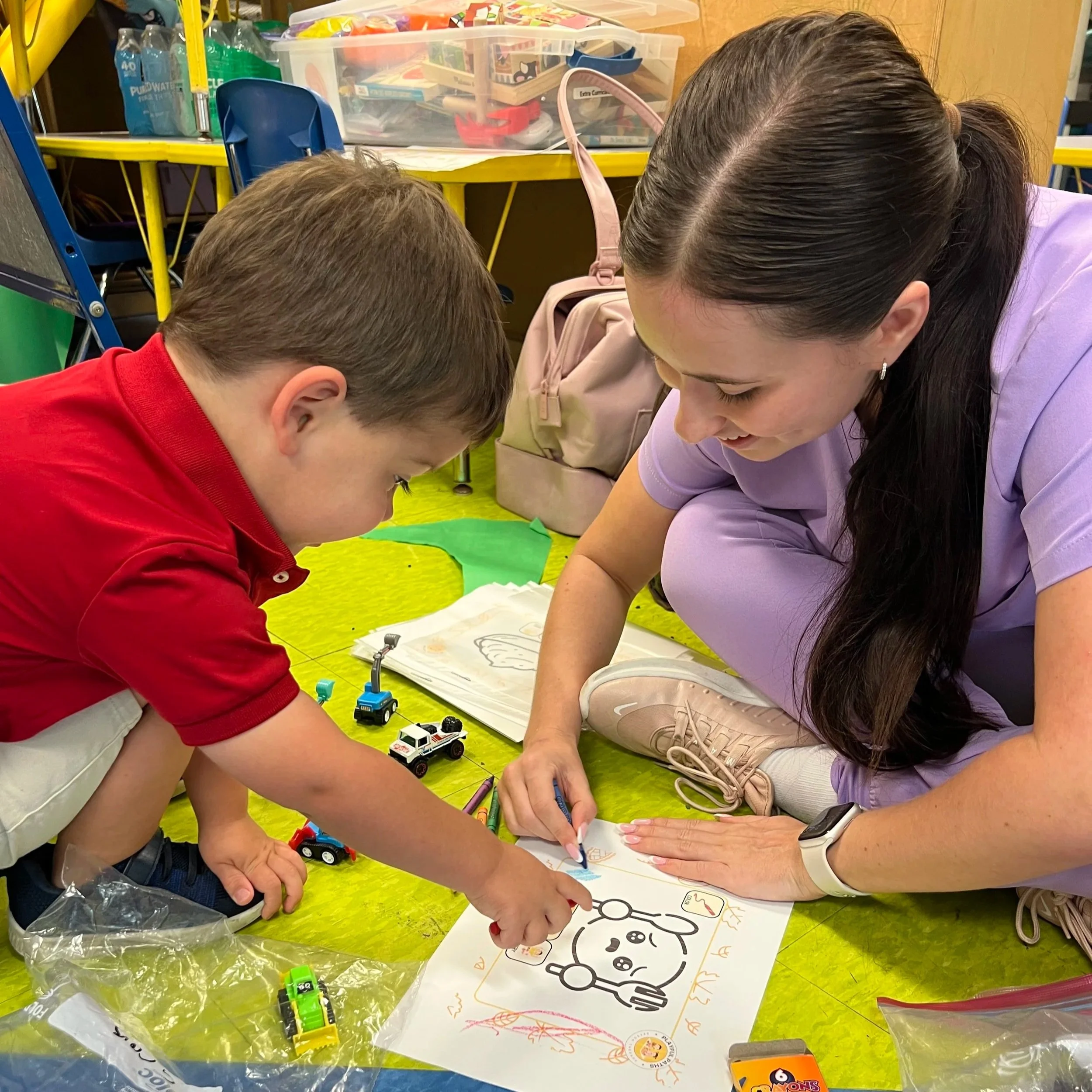
Modeling without expectation means you show your child how words look and sound on their AAC system without pressuring them to respond or imitate. You’re teaching by example, not testing for mastery.
Think of it like narrating your world together. You might say, “Look, fish!” while tapping LOOK and FISH on the device. You don’t wait for your child to answer or ask them to find the word. You simply model, connect, and move on.
ASHA (the American Speech-Language-Hearing Association) explains that modeling, or aided language input , helps children learn to use symbols by watching others use them in real contexts (ASHA, n.d.). Just as toddlers learn spoken language by hearing it every day, AAC learners gain understanding when they see it used authentically and consistently.
When we model without expectation, we tell our children:
“Your voice is valid, even when you’re quiet. You don’t have to perform to be heard.”
That kind of emotional safety is where real communication begins.
Low-Tech AAC Trick Or Treat Halloween Core-Boards
Low-Tech AAC Trick Or Treat Halloween Core-Boards
At the Aquarium
The aquarium is one of the most magical places to put AAC into action. Between the colorful lights, moving water, and fascinating creatures, there’s no shortage of things to talk about!
Model words like look, big, swim, fast, water, fish, shark, turtle, wow, pretty, go, and more.

Try simple comments:
“Look! Big shark!”
“Go see penguins!”
“Wow, fast fish!”
For my family, one of my favorite AAC moments happens here. My son uses his device to tell me he wants to see his favorite, the lionfish. When we find it, he lights up and says, “Hi lionfish!” through his AAC. That single phrase captures what AAC is all about: curiosity, connection, and confidence in his own voice.
AAC can also help children express sensory needs like; loud, dark, stop, help, all done, too bright.
If your child uses AAC to say “too loud” or “all done,” they’re communicating self-awareness and self-advocacy, a huge step toward independence and regulation.
Model freely, without pressure. Every moment of wonder is a chance for language to grow.
At the Grocery Store
The grocery store is a real-world classroom for communication. There are decisions to make, things to describe, and routines to follow, all perfect for AAC modeling.
Model words like want, get, put, help, different, same, open, snack, juice, pay, yes, no, heavy, bag, cart.

Comment and narrate naturally:
“Let’s get apples.”
“You can help.”
“Uh oh, heavy bag!”
You can also model categories and descriptors like; fruit, cold, red, round, sweet. Even if your child doesn’t touch the device, your consistent modeling teaches that words have power, and that communication doesn’t only happen at home or in therapy.
And here’s the beautiful part — with time and confidence, AAC learners start taking the lead.
My oldest son has become so comfortable and confident with his AAC that he now independently goes to the Publix bakery and asks for his cookie, all on his own. That simple moment represents months of modeling, encouragement, and trust in his voice. It’s everyday proof that AAC isn’t just about language , it’s about belonging.
At the Eye Doctor
Appointments can feel overwhelming, with bright lights, new faces, and new sounds. AAC provides structure and a voice.
Model useful words like; see, can’t see, blurry, clear, light, dark, bright, help, done, okay.

Try short phrases:
“Too bright.”
“Can’t see.”
“Need break.”
If your child uses AAC to “read” the eye chart, celebrate it! My son can’t say the letters verbally, but with his AAC, he proves exactly which ones he can see. So we get accurate results on his eye exam! That moment is so powerful; it shows that understanding and communication go far beyond requesting.
ASHA reminds us that AAC supports both receptive and expressive development; modeling helps children understand language long before they produce it (ASHA, 2022).
At the Dentist
Dentist visits are full of sensations that can be tough to describe, but AAC makes it possible. Preview vocabulary before the visit like; open, stop, hurt, brush, clean, done, scared, help, okay, wait.
During the appointment, model the same words in real time:
“Open mouth.”
“Stop.”
“All done.”
AAC lets children advocate for themselves and builds trust that their words will be respected. You can even use AAC afterward to review: “Teeth clean,” “It hurt,” or “All done dentist.” These reflections reinforce self-expression and emotional processing.
At the Doctor’s Office
AAC becomes truly powerful when it gives children a voice in their own care. Model words like hurt, tummy, head, ear, throat, tired, sick, hot, cold, medicine, and scared.
Practice at home:
“My ear hurts.”
“Feel sick.”
“Need help.”
Even if your child doesn’t yet initiate these phrases, your modeling gives them the language they’ll need later. Every time you show that their device can communicate about pain, comfort, or feelings, you’re giving them something more than words; you’re giving them the power of expression.
At the Restaurant
One of the most empowering AAC moments happens at the table, when a child orders their own meal.
Model social and functional words: want, more, eat, drink, same, different, please, thank you, good, bad, all done.

Encourage participation:
“I want nuggets.”
“No cheese.”
“More drink please.”
Restaurants are also great for social exchanges: hi, bye, yum, like, don’t like. Even if the process takes longer, that independence is priceless. Every tap, every word is a reminder: this is my voice.
AAC Goes Where Your Child Goes
Here’s the golden rule: If your child goes, the AAC goes.
AAC isn’t meant to live in a backpack or on a shelf. It belongs in your child’s hands, or clipped to a strap, hanging across their shoulders, ready for every moment of life.
A person’s ability to speak doesn’t disappear when they leave the house. Communication is not location-dependent, and neither is AAC.
Wherever your child goes, the park, the store, the classroom, or grandma’s house, their voice goes too.
Create a simple reminder for your family by putting a small sign by your front door that says, “Don’t forget the AAC!” It’s a small habit that makes a big difference in building consistency, confidence, and inclusion.
Playful Paths Tip
This week, try bringing AAC into one new setting. Pick two or three words that fit the activity, model them naturally, and celebrate every attempt.
Remember: you’re not testing, you’re teaching by example. Every time you model, your child learns that communication isn’t about performance. It’s about connections.
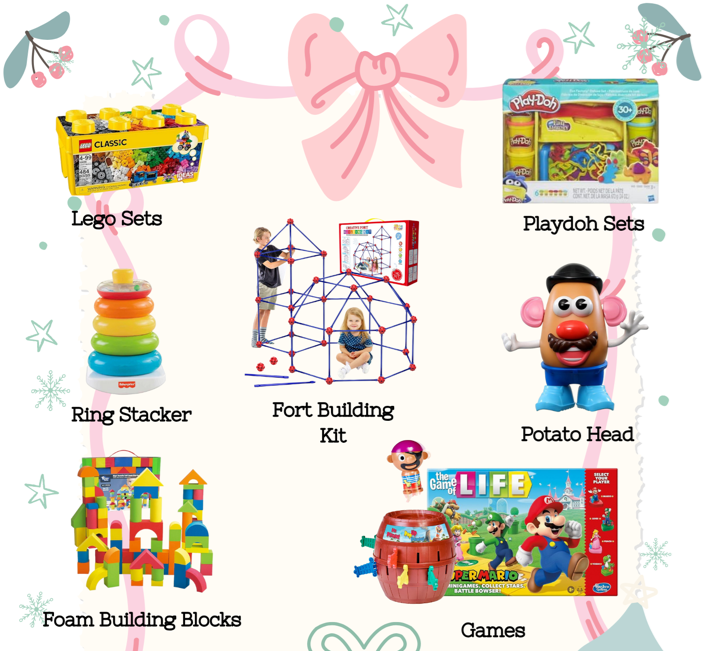
See our page of SLP reviewed and approved toys, books, and more!
Final Thought
AAC in action is about real communication in real places, messy, spontaneous, and beautiful.
From “hi lionfish” at the aquarium to “stop” at the dentist to “I want cookie” at the bakery, every word modeled is a bridge between your world and theirs.
AAC isn’t a device or an app; it’s a voice — and your child’s voice deserves to go everywhere life takes them.
This Month’s Special from Playful Paths!
We’re celebrating the season with two brand-new Core Communication Boards, created to make Halloween fun, inclusive, and language-rich for every child!
To get access to the core boards below, go to our Trick or Treat Core-boards Halloween Page. Then type in your name and email and be taken to the download, and have it emailed to you as well. Happy Halloween!

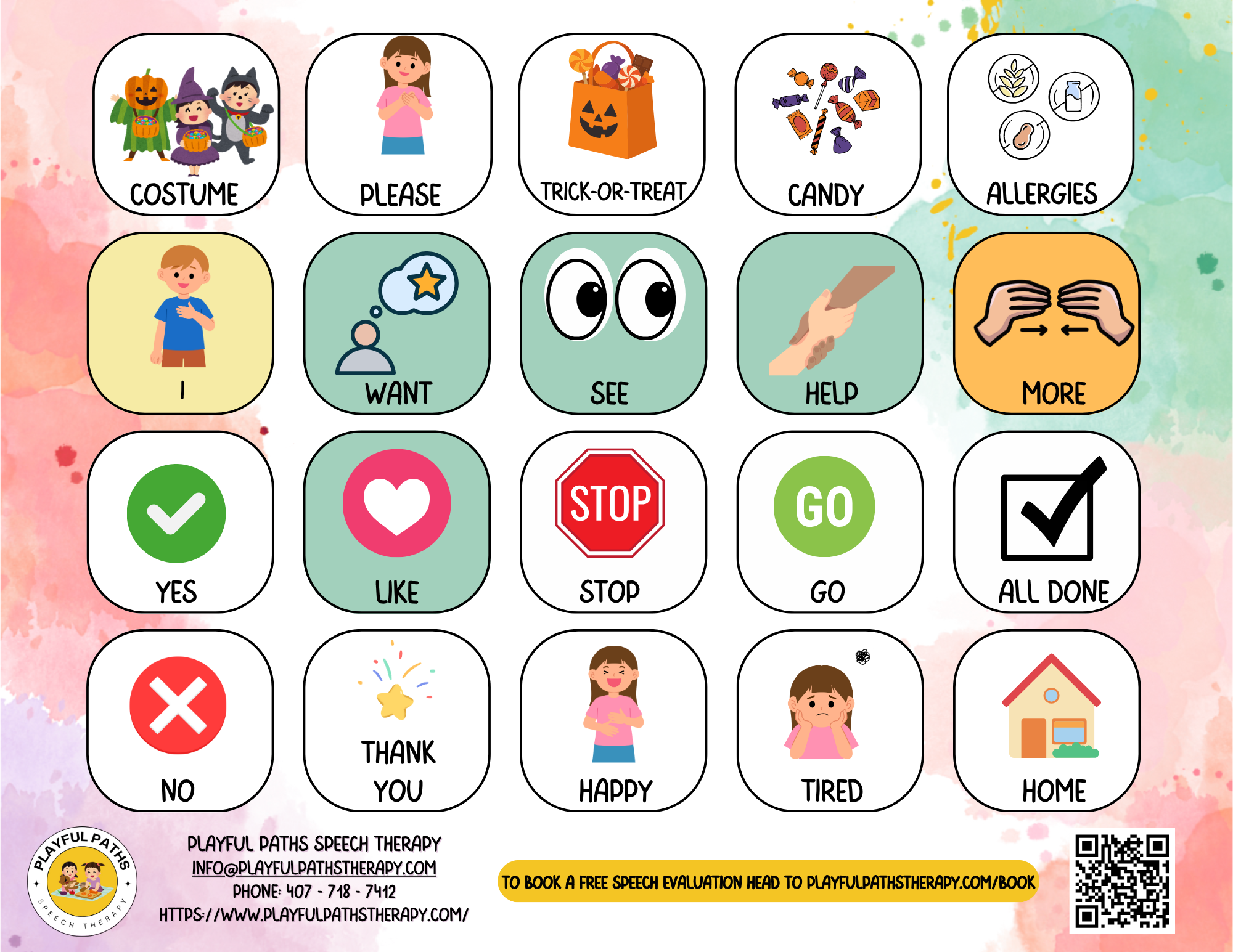

Trick-or-Treat Core Board:
Every child deserves to be part of the Halloween magic, to say “trick or treat” and “thank you,” in their own amazing way. This board makes it easy for AAC users to join in and share the fun.
Pumpkin Patch Core Board:
Heading out to pick pumpkins? Don’t wonder if your child wants a big or small pumpkin this year, ask! Our free pumpkin-patch core board includes seasonal fringe words for size and feelings, so your child can be part of every fall decision.
Download both boards for free this month, because communication should be as accessible (and festive!) as possible.
References
American Speech-Language-Hearing Association (ASHA). (n.d.). Augmentative and
Alternative Communication (AAC). https://www.asha.org/public/speech/disorders/aac